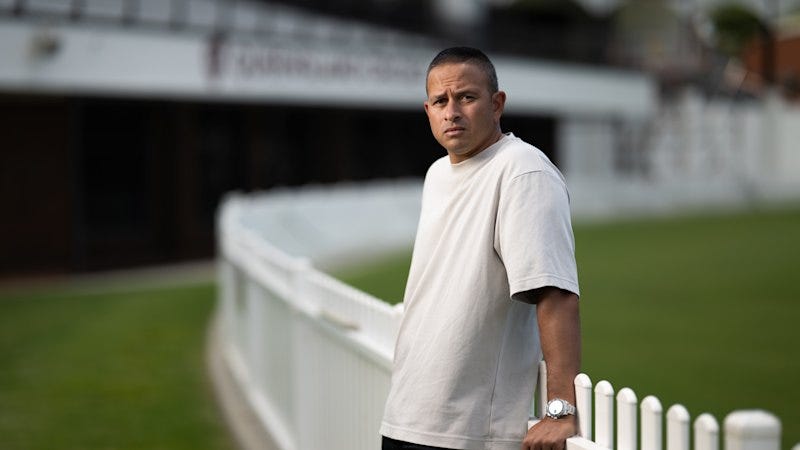
I’d imagine breaking ranks is never easy. Is it a single question or a sequence?
You see something, you carry it. Then one day you decide carrying it is worse than telling.
Usman Khawaja’s book, Sabr, landed this week. Eight years after Sandpapergate—the ball-tampering scandal that saw Smith, Warner, and Bancroft banned—Khawaja claims the entire Australian team knew. Everyone. Not just the three who were chastened.
Cricket Australia is standing by its original findings—of course it is, true to its monopoly policy. The pie-chuckers denied knowledge. Cummins says he’s moved on. The wagons are circling; lines look drawn. Khawaja is standing on the other side of them.
Did he break ranks? Or did he just stop pretending? Or is there an ulterior wealth-accumulation plan at play—haha, you don’t need Mensa to work that out.
We talked about allegiance, Saturday. There’s a version of loyalty that requires silence. Sport runs on it. So do politics, corporations, and families. The code isn’t written down, but everyone knows: what happens in the room stays in the room. Until it doesn’t.
In Washington this week, a different kind of rank-breaking is underway. The midterms turned red to blue. Now the question is who in the GOP will distance themselves first—and how far they’re willing to go. Rubio, Vance, and others who owed their rise to one man are now calculating whether allegiance or survival matters more.
The whistleblower’s dilemma is always the same—in cricket, in politics, in life. The truth doesn’t change depending on when you tell it. But the cost does.
Breaking ranks is neither brave nor cowardly. It’s complicated. And the people who’ve never had to do it are usually the loudest critics of those who have. Make of that what you will.
Nick